Technology analyst firms research, analyse and evaluate tech trends, vendors and products. They provide market insights, data-driven forecasts and strategic advice to help organisations make informed technology purchasing and investment decisions.
Whether it's those sat in the major firms such as Gartner, Forrester or IDC or those in more niche organisations such as Constellation Research, Futurum or Paradigm B2B, analysts have the potential to drive significant, positive change and business growth.
Analyst reports rank first or second among the content assets B2B buyers find most meaningful, according to Forrester's Buyers' Journey Survey, 2025. Their influence also grows with company size. Enterprise buyers are up to ten percentage points more likely than the smallest businesses to say analyst reports matter when they are discovering, evaluating and committing. Forrester's own analysts put it plainly, noting that buyers trust analysts more than they trust vendor executives or sales teams.
Companies can be reluctant to engage with the analyst community, believing the costs will be prohibitive, or they need to engage in a lengthy contract, or simply a lack of in-house analyst relations expertise. Challenging these misconceptions and removing some of the perceived barriers to engagement is therefore an important first step in understanding how analyst relations can become a valuable bridge between vendors and the analyst community.
Perception 1: “Analyst relations is costly and complex.”
This doesn't have to be the case. By having a defined strategy that clearly maps the analysts who influence your target audience, it's possible to develop a structured communications campaign to ensure that you have a regular, timely interactions with the analysts who matter most. As analysts generally like to have three-to-six-month interactions with vendors, a structured plan makes it possible to demystify the process of analyst relations and control costs, both in terms of time and financial resources.
Perception 2: “I need to be a firm's client to engage with analysts and be considered for their research.”
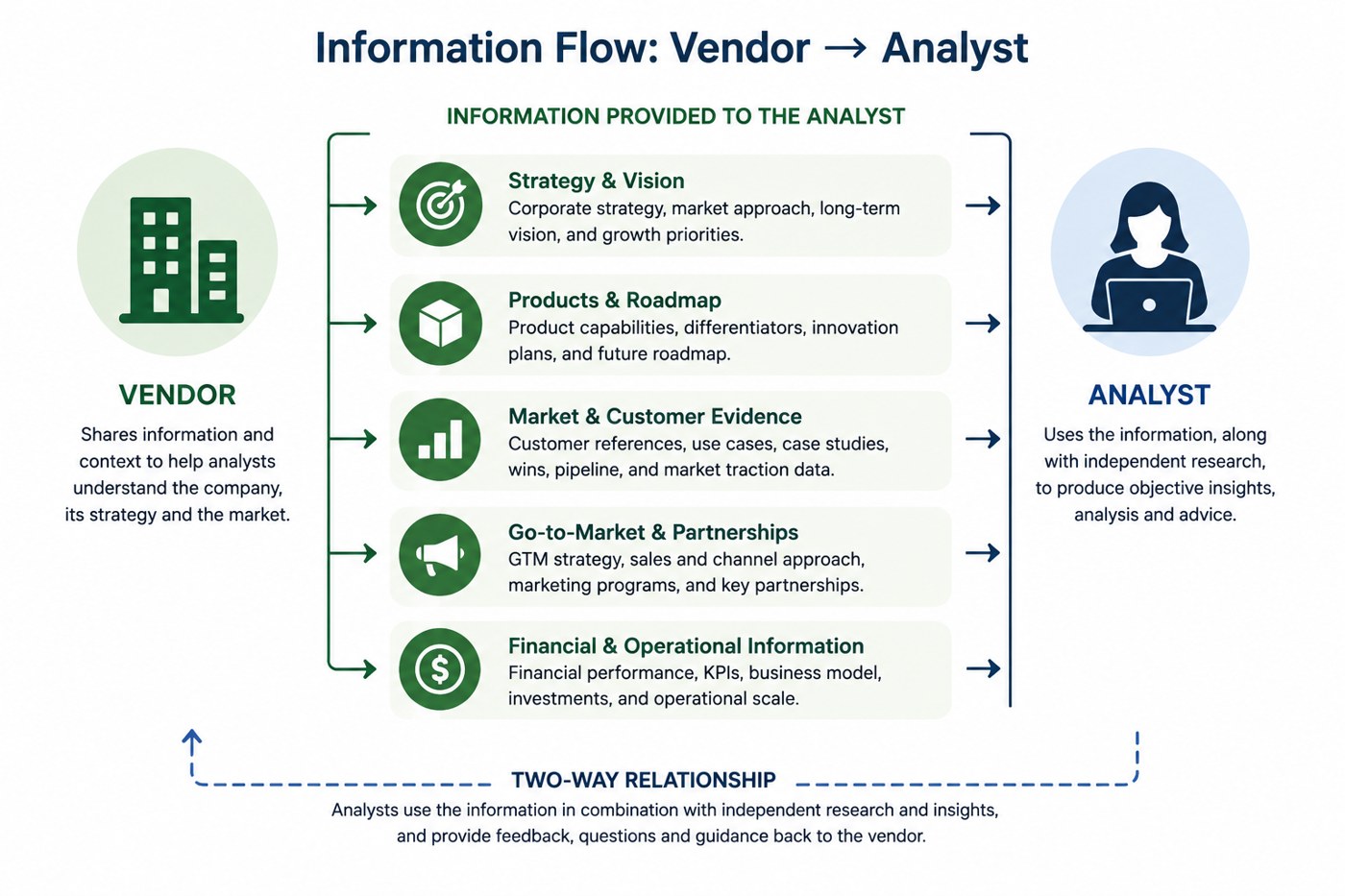
Not true. Providing a briefing to an analyst delivers an essential cadence of communication and any vendor can submit vendor briefing requests to an analyst firm for the analysts to consider. These interactions enable a vendor to introduce its value proposition and share important updates about its technology, solution offerings, or strategic company updates. Briefings ensure analysts have access to the latest insights and information, enabling them to provide informed guidance to their clients and, ultimately, influence the decisions of prospective customers.
Perception 3: “Analyst relations requires specialist expertise that we don't have in-house.”
That's where we come in. Working with an external analyst relations team provides the expertise, contacts and resources to develop the right strategy for your organisation, aligned to your product roadmap, competitive positioning and growth objectives. It also helps build relationships with key industry influencers to turn analyst interactions into valuable strategic assets.
Analyst relations is an accessible discipline that puts your organisation in front of the people who shape market perceptions, influence shortlists and advise the customers you want to reach. Identifying analysts who matter, engaging with them consistently and equipping them with the right information at the right time is essential for an organisation to build brand awareness and credibility with those analysts who influence the buying decisions that matter, alongside a wider B2B tech PR programme.
One final point, on timing. Analyst influence accumulates over time, so the relationships you build this quarter will shape the research notes, evaluations and shortlist conversations of the next twelve to eighteen months. The credibility a competitor has built through two years of consistent briefings cannot be matched by one meeting when your briefing request is accepted. If you are ready to brief an analyst, our advice would be to act quickly.
Ready to brief an analyst?
Analyst influence compounds. The sooner you start, the sooner you show up on shortlists.
Get in touch